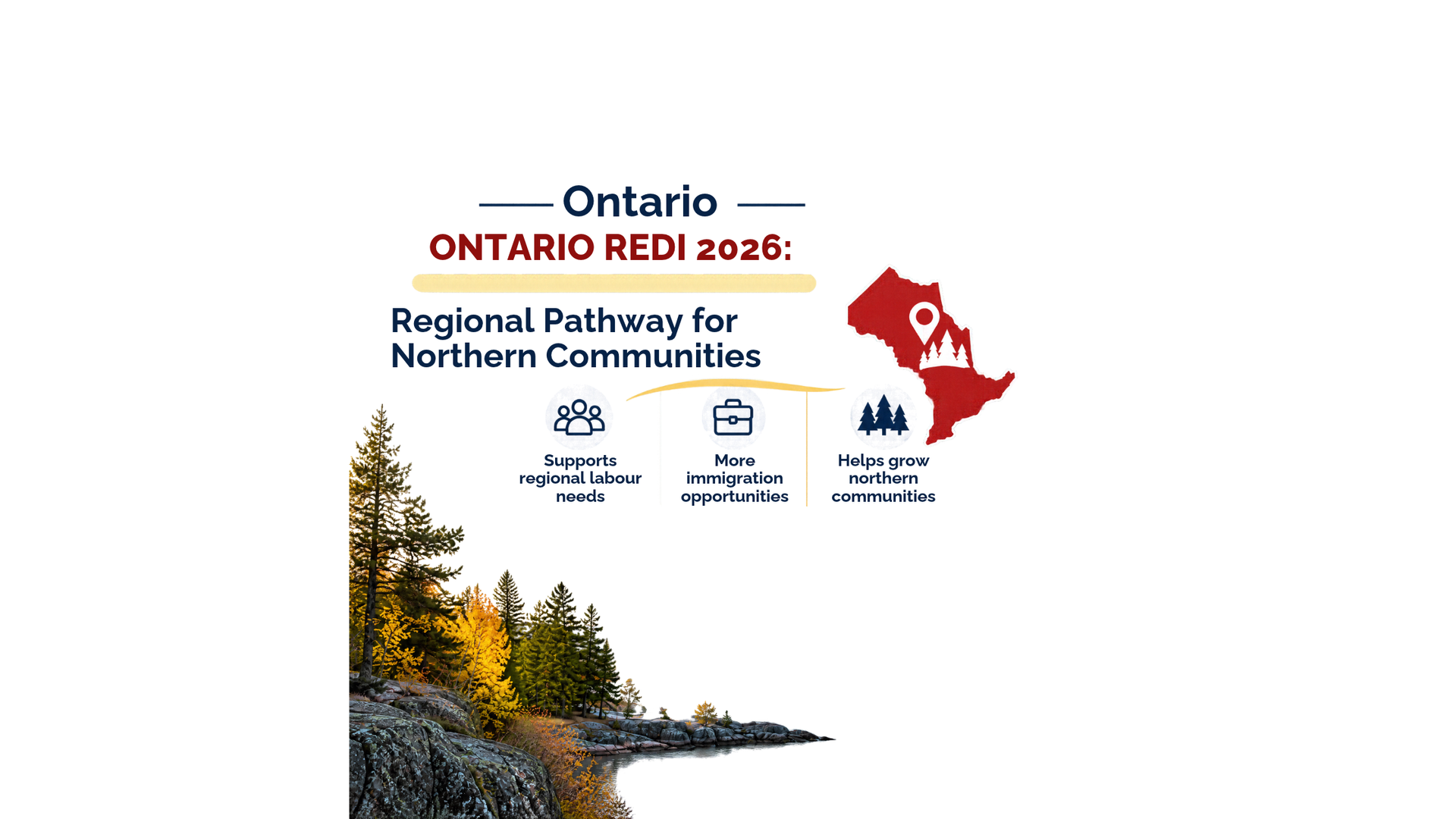
On November 9, 2026, Canada announced that the Rural Community Immigration Pilot will become a permanent economic immigration program. For Sault Ste. Marie, that matters, because our community is one of the 14 expected to take part. The Rural Community Immigration Program keeps the pilot’s community-driven model, but it comes with transition dates and rule changes that workers and employers need to understand.
Many workers and employers in Northern Ontario are asking whether the pilot’s rules still apply. The answer is that some things stay the same and some do not. If you or your employer are part way through the pilot process, the dates below are especially important.
This blog explains what is changing, who can use the program, what happens to pilot recommendations, and what to do now. It is based on IRCC program pages and the Canada Gazette. We will also flag what IRCC has not yet confirmed.
Not sure if this applies to your situation? Book a consultation with iCA Immigration and Talent Services today and get clarity from a licensed RCIC.
👉
https://www.ica-immigration.ca/book-a-consultation
Rural Community Immigration Program: What Changed
IRCC launched the Rural Community Immigration Pilot in January 2025. On November 9, 2026, Minister Lena Metlege Diab announced that it will become a permanent program. The regulations creating the permanent class were registered on October 22, 2026 and published in the Canada Gazette on November 4, 2026.
How the Program Works
The permanent program continues the pilot’s model. Local economic development organizations set priority sectors and occupations based on local labour needs. They also vet and designate employers, and only designated employers in priority sectors can use the program.
The process is employer-driven. A designated employer offers a job, the community issues a certificate of recommendation, and the candidate then applies to IRCC for permanent residence. IRCC makes the final decision on every application.
The 14 Participating Communities
IRCC expects the 14 pilot communities to take part in the permanent program:
- Ontario: North Bay, Sudbury, Timmins, Sault Ste. Marie, Thunder Bay
- Manitoba: Steinbach, Altona/Rhineland, Brandon
- British Columbia: West Kootenay, North Okanagan Shuswap, Peace Liard
- Alberta: Claresholm
- Saskatchewan: Moose Jaw
- Nova Scotia: Pictou County
New communities can apply through an expression of interest process if they have a population under 200,000 and a Statistics Canada Index of Remoteness score of 0.20 or higher. As of November 10, 2026, IRCC has not named any new communities or said when the next expression of interest will open.
Who Can Use the Rural Community Immigration Program
The Canada Gazette sets out the requirements for the permanent class. Applicants must meet them from the time they apply until they become permanent residents.
Requirements for Workers
- A valid certificate of recommendation from the community, valid for one year from the date it is issued
- An eligible job offer: non-seasonal, full-time, indefinite, with at least 75 percent of the work in the designated community
- A wage at or above the Job Bank range for the occupation
- One year of full-time eligible work experience, or 1,560 hours, in the past three years, unless exempt
- A Canadian educational credential or a foreign credential that is equivalent to Gr. 12
- A language test result less than two years old that meets the required level in all four skills
- Settlement funds, unless you are already authorized to work and working in Canada
- An intention to live in the designated community, and valid temporary resident status if you are in Canada
Requirements for Employers
An economic development organization must designate an employer before it can support a candidate. The Gazette lists criteria that include:
- Operating in the community for at least two years under the same ownership, or making a substantial contribution to its economy
- Working in a sector or occupation on the community’s priority list
- Completing intercultural competency and onboarding training
- Committing to support settlement and following worker protection laws
Fees are not allowed. Economic development organizations must not charge fees for designating employers or issuing certificates. An employer can lose designation if it or its recruiters charge fees to foreign nationals.
Every immigration case is unique. Before making any decisions, speak with Jennifer Johnson, RCIC at iCA Immigration and Talent Services to review your specific circumstances.
👉
https://www.ica-immigration.ca/book-a-consultation
Transition Dates You Need to Know
The biggest practical issue is what happens to people already in the pilot. The Gazette and IRCC’s pilot page set out these dates.
Key Dates
- December 31, 2026: Communities have until this date to finalize recommendations under the pilot
- January 1, 2027: The pilot closes, and communities may begin issuing recommendations under the permanent program
- June 30, 2027: The pilot’s ministerial instructions stay in force until this date, so candidates with a pilot recommendation can still apply
If your pilot recommendation is dated December 31, 2026 or earlier, IRCC says you must apply for permanent residence before it expires. Applications already received will continue to be processed.
Pilot Certificates and the New Class
The Gazette states that a certificate issued under the pilot cannot be used to meet the certificate requirement of the new permanent class. In other words, the two programs run on separate tracks. As of November 10, 2026, IRCC has not provided further clarification on how this affects each person who is part way through the process. We recommend booking a consultation for the most current guidance.
What This Means for Sault Ste. Marie
For Northern Ontario, a permanent program gives workers and employers a longer-term option. Healthcare, skilled trades, hospitality, and manufacturing employers in Sault Ste. Marie can plan their hiring knowing the program is no longer a trial. The community decides which sectors and employers take part, so local priorities matter.
For Workers
- Check whether your job and your employer are part of the community’s priority list
- Confirm whether you already hold a pilot recommendation, and note its date
- Gather your language results, education documents, and work records now
For Employers
- Ask whether your business meets the designation criteria
- Plan for the required training and settlement commitments
- Never charge a candidate fees for a job offer or recommendation
Common Mistakes to Avoid
Assuming a pilot recommendation carries over. The Gazette states that pilot certificates cannot be used to meet the permanent class requirement. Check your dates carefully.
Waiting until the deadline. If your pilot recommendation is dated December 31, 2026 or earlier, you must apply before it expires.
Paying for a job offer or certificate. Fees are prohibited for these steps, and they can cost an employer its designation.
Assuming every job qualifies. Only designated employers in priority sectors can use the program, and the job must meet the offer rules.
Expecting a guarantee. A community recommendation is not an approval. IRCC makes the final decision.
Ready to Take the Next Step?
Canada’s immigration rules change frequently and deadlines can be unforgiving. Whether you are just starting to explore your options or ready to submit your application, iCA Immigration and Talent Services is here to guide you every step of the way.
Jennifer Johnson is a Regulated Canadian Immigration Consultant (RCIC #R709916) based in Sault Ste. Marie, Ontario, serving clients across Northern Ontario and beyond.
Book your consultation today:
👉
https://www.ica-immigration.ca/book-a-consultation
Frequently Asked Questions
Q: Is the Rural Community Immigration Program permanent?
A: Yes. IRCC announced on November 9, 2026 that the Rural Community Immigration Pilot will become a permanent economic immigration program. The regulations creating the permanent class were published in the Canada Gazette on November 4, 2026. It keeps the community-driven model, where local organizations designate employers and recommend candidates. The 14 pilot communities are expected to take part. iCA Immigration and Talent Services can explain how this affects your situation.
Q: Is Sault Ste. Marie part of the Rural Community Immigration Program?
A: IRCC expects all 14 pilot communities to take part in the permanent program, and Sault Ste. Marie is one of them. North Bay, Sudbury, Timmins, and Thunder Bay are also on the list. Each community sets its own priority sectors and designates its own employers, so which jobs qualify depends on the local list. Contact iCA Immigration and Talent Services to find out how this applies to your job offer.
Q: What happens to my RCIP recommendation after December 31, 2026?
A: IRCC says that if your recommendation is dated December 31, 2026 or earlier, you must apply for permanent residence before it expires. The pilot closes on January 1, 2027, and its ministerial instructions stay in force until June 30, 2027. Applications already received continue to be processed. Dates are strict, so confirm yours. iCA Immigration and Talent Services can review your recommendation and timeline with you.
Q: What are the job offer requirements for the Rural Community Immigration Program?
A: The Canada Gazette says the job must be non-seasonal, full-time, and indefinite, with at least 75 percent of the work in the designated community. The wage must be at or above the Job Bank range for the occupation. The employer must also be designated by the community. Other requirements apply, including work experience, language, and education. iCA Immigration and Talent Services can help you check whether your offer qualifies.
Q: Can an employer charge fees for an RCIP job offer or recommendation?
A: No. The Canada Gazette states that economic development organizations must not charge fees for designating employers or issuing certificates. Employers can lose designation if they or their recruiters charge or collect fees from foreign nationals. If you are asked to pay for a job offer or a recommendation, be cautious and seek advice. iCA Immigration and Talent Services can help you understand your rights.
References
All information in this blog has been verified against official Canadian government sources as of November 10, 2026.
- IRCC, Overview of the Rural Community Immigration Program (November 9, 2026) — https://www.canada.ca/en/immigration-refugees-citizenship/news/2026/11/overview-of-the-rural-community-immigration-program.html
- IRCC, Rural Community Immigration Pilots: Who can apply — https://www.canada.ca/en/immigration-refugees-citizenship/services/immigrate-canada/rural-franco-pilots/rural-immigration/eligibility.html
- Canada Gazette, Part II, Volume 160, Number 22: Regulations Amending the Immigration and Refugee Protection Regulations (Rural Community Immigration), SOR/2026-217 — https://gazette.gc.ca/rp-pr/p2/2026/2026-11-04/html/sor-dors217-eng.html
Note: Immigration policies change frequently. While every effort has been made to ensure accuracy, we recommend verifying current requirements at canada.ca or booking a consultation with a licensed RCIC before making any immigration decisions.