PGWP to PR in Canada 2026: Every Pathway You Need to Know
Your Post-Graduation Work Permit has an end date. That date matters more than almost any other number in your immigration file right now. The PGWP to permanent residence Canada 2026 journey is real and achievable for thousands of international graduates every year, but it requires a clear understanding of which pathways are available, which ones apply to your specific situation, and how to act before your permit runs out.
Here is a fact that most PGWP holders do not fully appreciate: your PGWP is specifically designed by IRCC to help you gain work experience that will qualify you for permanent residence. The PGWP is not just a permit to work. It is a bridge. The question is which bridge you take and whether you start crossing it early enough. This blog covers every PR pathway available to PGWP holders in 2026, the eligibility requirements for each one, and what to do right now whether your permit expires in six months or two years.
Not sure which pathway applies to you? Book a consultation with iCA Immigration and Talent Services today and get clarity from a licensed RCIC.
https://www.ica-immigration.ca/book-a-consultation
Understanding Your PGWP Before You Plan Your PR Strategy
Before choosing a pathway, it is important to understand exactly what your PGWP gives you and what it does not.
A PGWP is an open work permit, meaning you can work for any Canadian employer without restriction. The length of your permit depends on the length of your study program. Graduates of programs shorter than two years receive a PGWP valid for the same duration as their program. Graduates of programs two years or longer receive a PGWP valid for three years. Master's degree graduates are eligible for a three-year PGWP regardless of program length.
There are two critical restrictions that every PGWP holder must understand. First, you cannot receive a second PGWP after completing a second program. Once your PGWP expires, that pathway to open work authorization is closed. Second, work experience gained while you were a full-time student, including co-op work terms, does not count toward the Canadian Experience Class minimum work experience requirement. Only work you do after graduating on your PGWP counts toward CEC eligibility.
As of November 1, 2024, most PGWP applicants must provide language test results when they apply. University graduates need CLB 7 and college graduates need CLB 5, based on the program of study. If you applied before that date, you may be exempt. Check your specific situation on the official canada.ca PGWP eligibility page before assuming you qualify.
Pathway 1: Canadian Experience Class Through Express Entry
The Canadian Experience Class (CEC) is the most direct and commonly targeted PR pathway for PGWP holders. It is designed specifically for people who have gained skilled Canadian work experience and want to transition to permanent residence without leaving the country.
To qualify for CEC, you need at least 12 months of full-time Canadian work experience in the past three years in a TEER 0, 1, 2, or 3 occupation. This experience must have been gained in Canada. The 12 months can be full-time, which means 30 hours per week for 12 months, or an equivalent amount of part-time work adding up to 1,560 hours total. You can combine part-time hours from multiple jobs to reach this threshold.
Once you meet the work experience requirement, you create an Express Entry profile and enter the pool. From that point, your Comprehensive Ranking System score determines how quickly you receive an invitation to apply for PR. CEC candidates with strong language scores, Canadian education, and skilled work experience typically rank competitively in the pool.
The most important strategic point about CEC is timing. If your PGWP expires in less than 12 months and you have not yet accumulated the required work experience, you need to act immediately, and think about an alternative strategy
Pathway 2: Express Entry French Language Category
If you speak French at an intermediate or higher level, the French language proficiency category within Express Entry is one of the most accessible PR pathways available in 2026. The CRS cutoff for French language draws has been significantly lower than general rounds throughout 2026, with the most recent draw on July 9, 2026 issuing 5,000 invitations at a CRS of 420.
To be eligible for French language category draws, you must achieve a minimum of NCLC 7 in all four French language abilities through an approved test such as the TEF Canada or the TCF Canada. You must also be eligible for at least one of the three Express Entry programs, which for PGWP holders typically means meeting CEC requirements or Federal Skilled Worker requirements.
Bilingual candidates who score NCLC 7 or higher in French and CLB 5 or higher in English receive an additional 50 CRS points on top of their core score. This bilingual bonus can meaningfully shift a candidate's position in the pool and often makes the difference between waiting indefinitely and receiving an invitation in a category round.
If you have not yet taken a French language test and have some French proficiency, registering for the TEF Canada or TCF Canada should be one of your immediate next steps.
Every immigration case is unique. Before making any decisions about your PR pathway, speak with Jennifer Johnson, RCIC at iCA Immigration and Talent Services to review your specific circumstances.
https://www.ica-immigration.ca/book-a-consultation
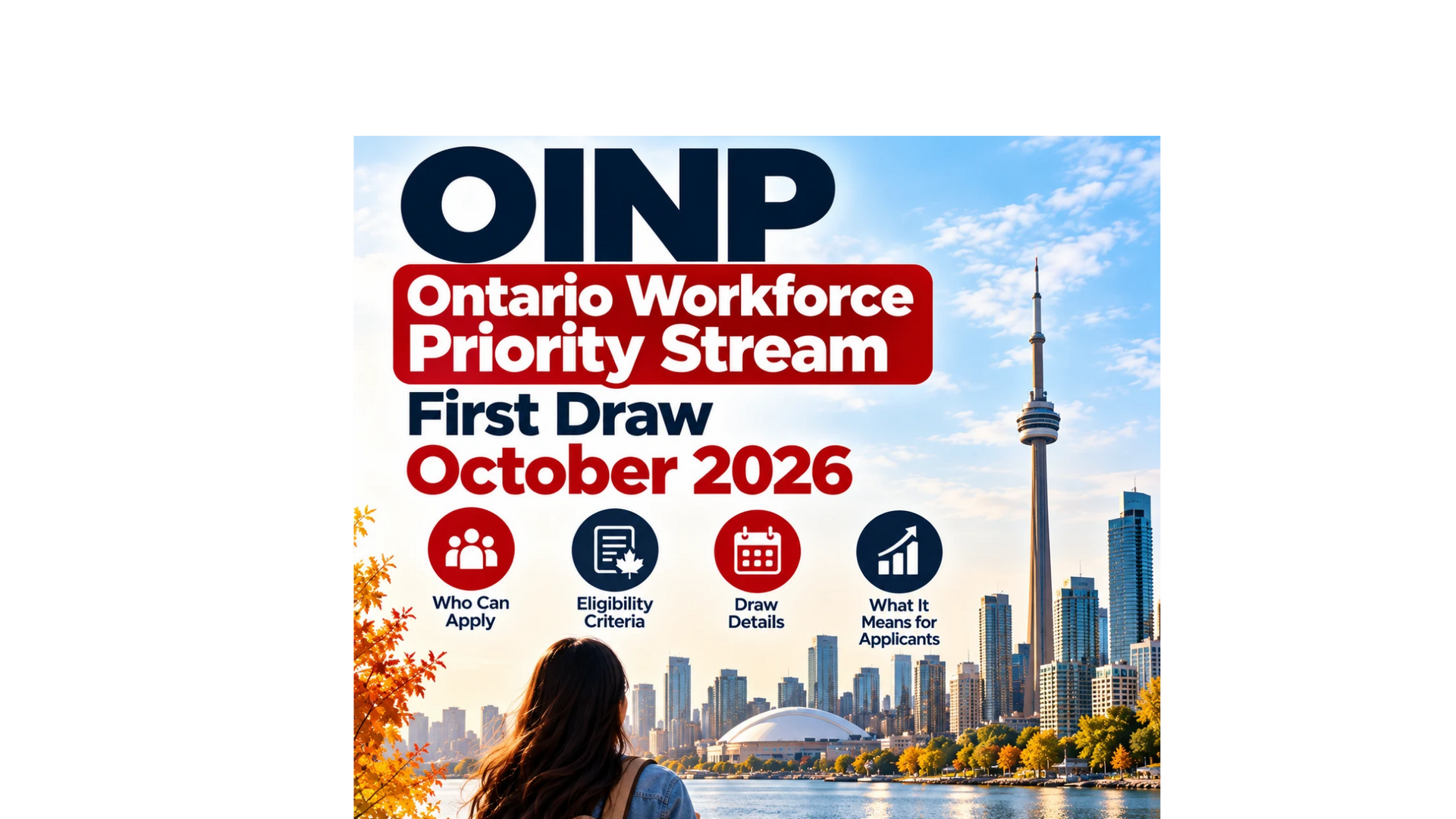
Pathway 3: Ontario Workforce Priority Stream
If you are a recent graduate of an Ontario post-secondary institution, the new Ontario Workforce Priority Stream, launched on June 26, 2026, includes provisions specifically designed for your situation.
Under the TEER 0-3 pathway of this stream, recent Ontario graduates qualify with a reduced work experience requirement. Recent Ontario graduates need only three months of consecutive experience with the same employer who offers them a job and support for OINP. Additionally, recent graduates may qualify at the lower low-wage threshold for their occupation, rather than the median wage threshold that applies to other TEER 0-3 applicants.
To qualify as a recent Ontario graduate under this stream, you must have obtained your credential within the past three years from an eligible Ontario post-secondary institution. Qualifying credentials include a degree or diploma from a program of at least two years full-time, an Ontario college graduate certificate, a master's degree, or a PhD.
You also need CLB 6 language proficiency in English or French across all four language abilities, and a full-time permanent job offer in a TEER 0, 1, 2, or 3 occupation from an eligible Ontario employer.
One critical note: the Expression of Interest system for the Ontario Workforce Priority Stream has not yet reopened as of July 20, 2026. Ontario has stated it is anticipated to open later in the summer. Use this time to confirm your eligibility and prepare your documents before the portal opens.
Pathway 4: Rural Community Immigration Pilot
If you are living and working in a designated smaller community in Ontario, the Rural Community Immigration Pilot (RCIP) offers a pathway to PR that does not rely on CRS scoring. This is a community-driven, employer-supported program where designated employers in designated communities support your PR application directly.
Sault Ste. Marie is a designated RCIP community. Some of the other designated communities in Northern Ontario include Sudbury, Thunder Bay, Timmins, and North Bay.
To qualify, you need at least one year of work experience in the past three years in a qualifying occupation, a valid job offer from a designated employer in the community, language proficiency at the CLB level required for your occupation, and a commitment to settle in the community.
RCIP applications in Sault Ste. Marie are currently paused for June and expected to reopen in August 2026. If you are a PGWP holder working in Sault Ste. Marie or another designated Northern Ontario community, this may be your most direct and accessible route to permanent residence. Processing takes an estimated six to eight weeks after a complete application is received.
Pathway 5: In-Canada Workers Initiative
If you have already submitted a PR application through the Provincial Nominee Program, the Atlantic Immigration Program, a community immigration pilot, or the caregiver pilots, and you have been living in a smaller community for at least two years, your application may already be being fast-tracked under the In-Canada Workers Initiative.
This is not a new application program. IRCC is selecting eligible workers automatically from existing inventories. If this describes your situation, you do not need to take any action. As of the end of April 2026, 7,000 workers had already been granted PR under this initiative, representing 35 percent of the 2026 target of 20,000 approvals.
If you submitted a PR application through one of the eligible programs and are unsure whether your file qualifies, a consultation with a licensed RCIC is the best way to confirm your status.
Pathway 6: Bridging Open Work Permit
A Bridging Open Work Permit (BOWP) is not a PR pathway on its own. It is a tool that allows you to continue working legally in Canada while your PR application is being processed, if your PGWP is about to expire or has recently expired.
To qualify for a BOWP, you must currently hold a valid work permit, have reached a stage in the PR application process where you are eligible to apply, and be applying through a qualifying PR program such as Express Entry. Note, some PR pathways offer employer-specific work permits, rather than BOWP, so check your eligibility with an RCIC. Submitting the wrong kind of work permit application will result in a refusal and can cause you to go out of status.
The BOWP gives you full open work authorization, meaning you can work for any employer, until IRCC makes a final decision on your PR application. If your PR application is ultimately refused, your BOWP authorization ends.
If your PGWP is within the final months of its validity and your PR application is in progress, applying for a BOWP as soon as you are eligible is the most effective way to protect your legal work status in Canada.
What This Means for International Graduates in Northern Ontario
Northern Ontario has a significant and growing population of international graduates from Sault College, Algoma University, and other institutions in the region. For these graduates, the combination of pathways described above creates multiple routes to permanent residence without leaving Canada.
Targeting eligible work and settlement in Northern Ontario can be an excellent strategy for PR eligibility. The establishment and success of RCIP makes Northern Ontario one of the most accessible regions in Canada for international graduates pursuing PR through employer-supported pathways. The Ontario Workforce Priority Stream announced reduced experience requirements for recent graduates and created employer-revenue advantages for Northern Ontario businesses, making this program accessible to many.
If you are a PGWP holder working in Northern Ontario, the worst thing you can do is wait. Every month your PGWP runs without a PR strategy in place is a month of eligibility accumulating without a plan behind it.
Common Mistakes PGWP Holders Make
Waiting until the PGWP is about to expire before exploring options
By the time your permit has six months remaining, some pathways may already be unavailable to you. Explore your options at least 12 months before your permit expires, or immediately if you are already within that window.
Assuming co-op experience counts toward CEC
Work completed during a co-op or work placement while you were a full-time student does not count toward the 12-month CEC work experience requirement. Only work completed after graduating is eligible.
Not verifying your program's field of study CIP code
As of November 1, 2024, most college graduates need their program's CIP code to be on the eligible list to qualify for a PGWP. If your program was not in an eligible field of study when you applied for your study permit or PGWP, you may not be eligible for the PGWP at all. Verify this before making any assumptions.
Assuming you cannot get a BOWP because your PR application is not approved yet
You do not need a final PR approval to get a BOWP. You need to have reached an eligible stage in the PR process. The BOWP protects your work authorization while you wait for a decision.
Not creating an Express Entry profile as soon as you hit 12 months of CEC work experience
Every week you delay entering the Express Entry pool is a week you are not accumulating time in the pool, which affects the tie-breaking timestamp that may determine whether you receive an invitation in a competitive draw.
Ready to Take the Next Step?
Canada's immigration rules change frequently and deadlines can be unforgiving. Whether your PGWP expires in two years or two months, the time to build your PR strategy is now.
Jennifer Johnson is a Regulated Canadian Immigration Consultant (RCIC #R709916) based in Sault Ste. Marie, Ontario, serving clients across Northern Ontario and beyond.
Book your consultation today: https://www.ica-immigration.ca/book-a-consultation
Frequently Asked Questions
Q: How long do I need to work in Canada on my PGWP before I can apply for permanent residence through Express Entry?
A: To qualify for the Canadian Experience Class through Express Entry, you need at least 12 months of full-time Canadian work experience in a TEER 0, 1, 2, or 3 occupation within the past three years. This experience must be gained after graduation on your PGWP, as co-op work completed while a full-time student does not count. The 12 months can be full-time hours at a single employer or combined part-time hours totalling 1,560 hours across multiple employers. Contact iCA Immigration and Talent Services to confirm whether your current work experience qualifies.
Q: Can I get permanent residence through the Ontario Workforce Priority Stream as a recent graduate?
A: Yes, recent Ontario graduates qualify for the TEER 0-3 pathway under the new Ontario Workforce Priority Stream with reduced requirements. You need only three months of consecutive work experience with your job offer employer and you may qualify at the lower wage threshold for your occupation. You must have obtained your credential within the past three years from an eligible Ontario post-secondary institution and hold a full-time permanent job offer in a TEER 0-3 occupation. The Expression of Interest system is expected to reopen later in summer 2026. Book a consultation with iCA Immigration and Talent Services to confirm your eligibility.
Q: What is a Bridging Open Work Permit and do I need one as a PGWP holder?
A: A Bridging Open Work Permit (BOWP) allows you to continue working legally in Canada while your permanent residence application is being processed, if your current work permit is expiring. If your PGWP is about to expire and you have a PR application in progress through Express Entry, you may be eligible for a BOWP. Without it, you could face a gap in work authorization while waiting for a PR decision. Contact iCA Immigration and Talent Services to determine whether you should apply for a BOWP given your current application stage and PGWP expiry date.
Q: I graduated from Sault College. Can I use the RCIP pathway in Sault Ste. Marie to get permanent residence?
A: Sault Ste. Marie is a designated RCIP community, so this pathway may be available to you if you have a qualifying job offer from a designated employer in the city, meet the work experience (if necessary) and language requirements, and commit to living in the community. Sault College is an eligible institution and work experience gained in the Sault area on your PGWP can count toward RCIP eligibility. RCIP applications are currently paused and expected to reopen in August 2026. Book a consultation with iCA Immigration and Talent Services to assess your RCIP eligibility and ensure your application is ready when intake reopens.
Q: My PGWP expires in four months and I have not yet reached 12 months of CEC work experience. What are my options?
A: You have several options and it is important to act immediately.
First, if you wish to remain in Canada, you must apply for an alternate status before your PGWP expires. Apply for another type of work permit only if you are sure that you qualify. .Second, explore whether you qualify for a BOWP if you have a PR application already in progress. Third, review the Ontario Workforce Priority Stream, which has a shorter work experience requirement for recent Ontario graduates. Fourth, consider the RCIP if you are working in a designated Northern Ontario community. Book a consultation with iCA Immigration and Talent Services today so you do not let the expiry date pass without a plan in place.
References
All information in this blog has been verified against official Canadian government sources as of July 11, 2026.
- Government of Canada, Post-Graduation Work Permit Program, canada.ca
https://www.canada.ca/en/immigration-refugees-citizenship/services/study-canada/work/after-graduation.html - Government of Canada, Express Entry: Canadian Experience Class eligibility, canada.ca
https://www.canada.ca/en/immigration-refugees-citizenship/services/immigrate-canada/express-entry/who-can-apply/canadian-experience-class.html - Government of Canada, Post-Graduation Work Permit field of study requirement, canada.ca
https://www.canada.ca/en/immigration-refugees-citizenship/services/study-canada/work/after-graduation/eligibility/field-of-study.html - Government of Canada, Express Entry: Category-Based Selection, canada.ca
https://www.canada.ca/en/immigration-refugees-citizenship/services/immigrate-canada/express-entry/rounds-invitations/category-based-selection.html - Ontario Government, 2026 Ontario Immigrant Nominee Program Updates, ontario.ca
https://www.ontario.ca/page/2026-ontario-immigrant-nominee-program-updates - Welcome to SSM, Rural Community Immigration Pilot, welcometossm.com
https://welcometossm.com/rcip/
Note: Immigration policies change frequently. While every effort has been made to ensure accuracy, we recommend verifying current requirements at canada.ca or booking a consultation with a licensed RCIC before making any immigration decisions.