IRCC Processing Times August 2026: Citizenship Certificate Hits 25 Months
On August 26, 2026, Immigration, Refugees and Citizenship Canada released its latest processing time data. Across most permanent residence categories the news was mixed but manageable. In one category, the numbers were simply stunning.
Citizenship certificate processing has now reached 25 months. In March 2026, that same category sat at 3 months. In the space of five months, the processing time for a citizenship certificate has grown by 22 months. The queue swelled by 22,300 applicants in the most recent reporting cycle alone, reaching approximately 122,000 people waiting.
To put that in context: a person who submitted a citizenship certificate application in early September 2026 based on current processing time data could expect to wait until the fall of 2028 for a decision. That is not a small administrative inconvenience. For people who need their citizenship certificate for a passport application, employment verification, travel outside Canada, or to establish their child's Canadian citizenship, a 25-month wait is a significant and deeply frustrating reality.
This blog covers everything confirmed in the August 26, 2026 IRCC processing times release, explains why the citizenship certificate category has experienced one of the most dramatic single-category surges in IRCC history, and gives you a clear picture of what to do if your situation requires a citizenship certificate in the near term.
Not sure how the August 2026 processing times affect your specific file? Book a consultation with iCA Immigration and Talent Services today and get clarity from a licensed RCIC.
https://www.ica-immigration.ca/book-a-consultation
The August 26, 2026 Processing Times Release
The August 26, 2026 processing times update presented a broadly mixed picture across IRCC's various lines of business. The citizenship certificate category dominated the headlines for obvious reasons, but the release also contained meaningful improvements in the economic immigration categories that are worth understanding alongside the more alarming citizenship data.
Federal Skilled Worker Program: 6 months
The FSWP improved to 6 months for the first time in 2026. This is a meaningful milestone that reflects IRCC's sustained effort to reduce the permanent residence backlog in Canada's flagship skilled immigration program. From July 2025 to June 2026, approximately 79 percent of FSWP applicants received a decision within the 6-month service standard, with roughly 50 percent receiving a decision in 5 months or less.
Canadian Experience Class: 6 months, queue shrinking
The CEC held steady at 6 months while the queue shrank by 1,800 applicants. This is a positive trend that reflects the high volume of category-based Express Entry draws throughout 2026 gradually moving applications through the system.
Citizenship certificate: 25 months, queue at 122,000
The citizenship certificate category grew by 6 months in the most recent reporting cycle alone, reaching a total of 25 months from a starting point of just 3 months in March 2026. The queue reached approximately 122,000 people, adding 22,300 in a single cycle.
International Experience Canada work permits: 6 weeks
IEC work permits sat at 6 weeks, one week less than the previous reporting period.
Visitor record extensions: 416 days
Visitor record extensions remain at 416 days, still above a full year for anyone waiting to extend a visitor's authorized stay in Canada.
Electronic Travel Authorizations: within 5 minutes
eTAs continue to arrive within approximately 5 minutes for most travellers, representing one of IRCC's highest-functioning automated processes.
The Citizenship Certificate Story: From 3 Months to 25 Months in 5 Months
The numbers alone are remarkable. The explanation behind them is equally significant.
A citizenship certificate, also known as a proof of citizenship, is a formal document that confirms a person is a Canadian citizen. It is different from a citizenship grant, which is the process through which a permanent resident applies for and receives Canadian citizenship after meeting the physical presence requirement. A citizenship certificate is issued to people who are already citizens and need a formal document proving that status.
The people who most commonly need a citizenship certificate include Canadians born outside Canada to a Canadian parent, people who gained citizenship through adoption, people who discovered they are Canadian through the restored citizenship provisions introduced under recent legislative changes, and Canadians who need to prove their status for employment, travel, or registering their own child's citizenship.
The Bill C-3 Connection
The single largest driver of the citizenship certificate queue surge is directly connected to Bill C-3, also known as the Citizenship Act amendments that restored Canadian citizenship to categories of people who had historically been excluded. These included Canadians who lost their citizenship when they claimed citizenship in another country before legal changes permitted dual citizenship, people born abroad to a Canadian parent who was themselves born abroad and had previously been cut off from citizenship, and internationally adopted children who did not automatically receive citizenship under earlier frameworks.
When Bill C-3 came into force, it created an immediate and substantial surge in citizenship certificate applications from people across Canada and around the world who discovered for the first time that they were Canadian citizens and needed a certificate to prove it. Many of these applicants have no physical presence in Canada, had never previously interacted with IRCC, and were unfamiliar with the application process. The resulting volume of new applications entering the queue has not been matched by a corresponding increase in IRCC's processing capacity for this specific category.
The result is exactly what the data shows: a queue that sat at 3 months in March has grown to 122,000 people by August, with 22,300 applicants added in the most recent cycle alone and a processing time that has climbed by 22 months in five months.
What Counts as a Citizenship Certificate Application
It is important to clarify that the processing times in this category apply to applications for proof of citizenship, not to applications for a citizenship grant. If you are a permanent resident who has met the physical presence requirement and wants to become a Canadian citizen, your application falls under the citizenship grant category, which has a different processing time and a different queue.
The citizenship certificate category is exclusively for people who are already citizens and need documentary proof. This distinction matters because the strategies available to address delays differ depending on which type of application you have submitted.
The Good News: Permanent Residence Is Moving
While the citizenship certificate story dominates the August 26 release for its shock value, the permanent residence data tells a more encouraging story that deserves equal attention.
The Federal Skilled Worker Program reaching 6 months is a notable positive development. The FSWP service standard is 6 months, which means IRCC is now meeting its own target for this program for the first time in 2026. Applicants who received invitations through Express Entry draws and submitted complete FSWP applications should see decisions arriving within this timeframe under current conditions.
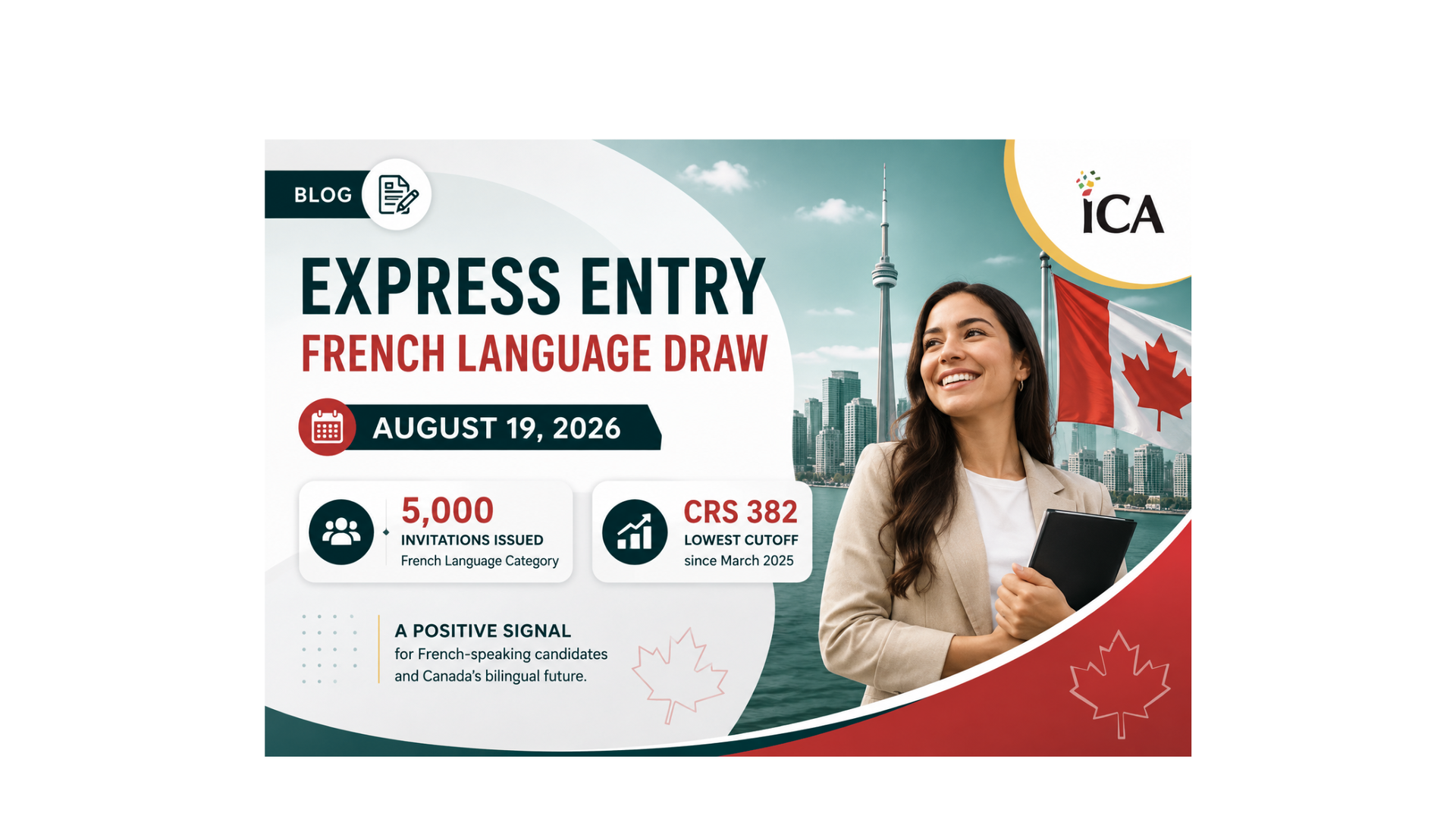
The CEC queue shrinking by 1,800 applicants even as processing volumes remain high reflects the sustained pace of Express Entry draws in 2026. With the French language category having now issued 50,500 invitations and the CEC contributing another 49,250 invitations through 14 draws, IRCC has been moving applications through the system at a pace that is actually reducing the CEC inventory.
For candidates who have recently received an invitation to apply and submitted their permanent residence application, this data is genuinely encouraging. The system is processing applications and the backlog in the economic immigration categories is contracting rather than growing.
Every immigration case is unique. Before making decisions about your citizenship application or permanent residence timeline, speak with iCA Immigration and Talent Services to understand how the August 2026 processing times apply to your specific file.
https://www.ica-immigration.ca/book-a-consultation
What to Do If You Are Waiting for a Citizenship Certificate
If you have already submitted a citizenship certificate application and are now looking at a 25-month processing estimate, there are several steps worth taking.
Keep your IRCC account updated
Any change in your address, contact information, or identification documents should be updated in your IRCC online account immediately. An application that cannot reach you will be delayed further.
Respond to any IRCC requests immediately
If IRCC sends a request for additional documentation or information, responding the same business day is strongly advised. Applications that sit waiting for a response from the applicant do not pause the queue for other applicants. They simply age within an already large queue while you wait.
Assess whether an urgent processing request applies
IRCC accepts requests for expedited or urgent processing in documented exceptional circumstances. These include imminent travel that cannot be postponed, a job offer that requires proof of citizenship as a condition of employment, or other time-sensitive circumstances where the delay creates documented hardship. An urgent processing request is not guaranteed to be approved, but it is a legitimate avenue available to applicants with genuine time-sensitive needs.
Understand what you can use instead while waiting
A citizenship certificate is one form of proof of citizenship but it is not the only one. Depending on your purpose, other documents including a Canadian passport, a birth certificate, a naturalization certificate, or previous citizenship documentation may serve as proof in some contexts. Confirm with the entity requesting proof of citizenship whether an alternative document would be acceptable while your certificate application is pending.
What This Means for Northern Ontario
For Sault Ste. Marie and Northern Ontario communities with significant newcomer populations, the August 26 processing times update has several practical implications.
The FSWP and CEC improvements at 6 months are directly relevant to workers who received Express Entry invitations in the high-volume July and August draws and have since submitted permanent residence applications. Processing these applications within 6 months means many Northern Ontario workers who applied this summer could receive their permanent residence decisions by early 2027.
The citizenship certificate delays are relevant to the growing number of Northern Ontario residents who discovered Canadian citizenship through Bill C-3 connections, as well as the children and grandchildren of established Canadian citizens in the community who need citizenship documentation for their own children. The 25-month processing time means planning well in advance of any need for the certificate is essential.
The visitor record extension time of 416 days continues to affect families in Northern Ontario hosting parents, relatives, or family members on visitor status. With the Parents and Grandparents permanent residence program paused and the super visa being the recommended alternative, families should be aware that any visitor record extension submitted now will not be decided for well over a year.
Common Mistakes to Avoid
Confusing a citizenship certificate application with a citizenship grant application
These are two different applications with two different queues and two different processing times. If you are a permanent resident applying to become a citizen, you are applying for a citizenship grant, not a citizenship certificate. The 25-month figure does not apply to your application. Confirm which application type you submitted before drawing any conclusions from the August 26 data.
Not submitting an urgent processing request when circumstances genuinely warrant it
Many applicants assume that urgent processing requests are not worth making because IRCC is too backlogged to respond. Legitimate urgent requests with proper documentation are still assessed by IRCC. If your need for a citizenship certificate is genuinely time-sensitive due to employment, travel, or another documented circumstance, submitting an urgent request is the correct next step rather than simply waiting.
Assuming the processing time will not change before your application is decided
Processing times are updated regularly and reflect current queue conditions at the time of publication. They are not a guarantee of when your specific application will be decided. A processing time of 25 months today could shorten or lengthen depending on how IRCC allocates resources to this category over the coming months.
Not updating contact information in your IRCC account
A common reason for application delays that applicants can control is outdated contact information. If IRCC cannot reach you, your application cannot progress. Check your IRCC secure account and confirm your current address, email, and phone number are accurate.
Submitting a citizenship certificate application without understanding what alternatives exist
Before submitting a new citizenship certificate application and joining a 122,000-person queue, confirm whether an existing document such as a Canadian passport, previous naturalization certificate, or birth certificate already serves your purpose. In many situations, a citizenship certificate is requested by habit rather than necessity.
Ready to Take the Next Step?
Canada's immigration processing times change regularly and the gap between a published processing time and the decision on your specific application can be significant. Whether you are waiting for a citizenship certificate, have recently submitted a permanent residence application, or are trying to understand how the August 2026 data affects your timeline, getting clarity from a licensed professional is the most effective way to make informed decisions.
Jennifer Johnson is a Regulated Canadian Immigration Consultant (RCIC #R709916) based in Sault Ste. Marie, Ontario, serving clients across Northern Ontario and beyond.
Book your consultation today:
https://www.ica-immigration.ca/book-a-consultation
Frequently Asked Questions
Q: Why has citizenship certificate processing time jumped from 3 months to 25 months in 2026?
A: The citizenship certificate queue has grown dramatically in 2026, reaching approximately 122,000 people by August 26. The primary driver is a surge in applications connected to recent legislative changes that restored Canadian citizenship to categories of people who had previously been excluded, including Canadians who lost citizenship under earlier laws and people born abroad to Canadian parents in circumstances previously excluded from citizenship by descent. This created a large volume of new applications entering the queue without a corresponding increase in IRCC's processing capacity for this specific category. Contact iCA Immigration and Talent Services to understand how this affects your specific situation.
Q: Is the 25-month citizenship certificate processing time the same as the citizenship grant processing time?
A: No. These are two different application types with different queues and different processing times. A citizenship grant is the application a permanent resident submits to become a Canadian citizen after meeting the physical presence requirement. A citizenship certificate is proof of citizenship issued to people who are already citizens and need documentation. The 25-month figure from the August 26, 2026 release applies to citizenship certificates only. Contact iCA Immigration and Talent Services to confirm which category your application falls under and what the current processing time means for your specific file.
Q: What can I do while I wait for my citizenship certificate if I need it urgently?
A: If your need for a citizenship certificate is genuinely time-sensitive due to employment, travel, or another documented circumstance, you can submit an urgent processing request to IRCC with documentation supporting your urgency. IRCC reviews these requests and can expedite processing in qualifying cases. Additionally, depending on the purpose for which citizenship proof is required, other existing documents such as a Canadian passport, naturalization certificate, or birth certificate may be acceptable as an alternative while your certificate application is pending. Contact iCA Immigration and Talent Services to assess your specific options.
Q: What does the FSWP improving to 6 months mean for my Express Entry permanent residence application?
A: The Federal Skilled Worker Program reaching 6 months as of August 26, 2026 means IRCC is now meeting its own 6-month service standard for FSWP applications for the first time in 2026. From July 2025 to June 2026, approximately 79 percent of FSWP and CEC applicants received a decision within this standard, with roughly 50 percent decided in 5 months or less. If you submitted a complete FSWP application through Express Entry after receiving an invitation to apply, current conditions suggest you may receive a decision within approximately 6 months of submission. Contact iCA Immigration and Talent Services to understand what these processing times mean for your specific application.
Q: My parent is on a visitor record extension. How long will the extension take to process?
A: As of the August 26, 2026 processing times release, visitor record extensions are currently taking approximately 416 days to process. If your parent submitted a visitor record extension before their current status expired, maintained status protects their authorized stay in Canada while the extension is being processed, provided the extension application was submitted on time and they are eligible for the extension they applied for. However, a 416-day processing time means planning well in advance of any status expiry is critical. Contact iCA Immigration and Talent Services to discuss the visitor status options available for your family member.
References
All information in this blog has been verified against official Canadian government and immigration tracking sources as of September 3, 2026.
- Government of Canada, Inside IRCC's Application Processing System (updated August 2026)
https://www.canada.ca/en/immigration-refugees-citizenship/corporate/reports-statistics/statistics-open-data/immigration-stats/application-processing-system.html - Government of Canada, Check Processing Times
https://www.canada.ca/en/immigration-refugees-citizenship/services/application/check-processing-times.html - Government of Canada, Citizenship Certificate: Who Can Apply
https://www.canada.ca/en/immigration-refugees-citizenship/services/canadian-citizenship/proof-citizenship/eligibility.html - Government of Canada, Citizenship Grant: Apply for Citizenship
https://www.canada.ca/en/immigration-refugees-citizenship/services/canadian-citizenship/become-canadian-citizen/apply.html - Government of Canada, Express Entry: Category-Based Selection
https://www.canada.ca/en/immigration-refugees-citizenship/services/immigrate-canada/express-entry/rounds-invitations/category-based-selection.html
Note: Immigration policies and processing times change frequently. While every effort has been made to ensure accuracy, we recommend verifying current processing times directly at canada.ca or booking a consultation with a licensed RCIC before making any immigration decisions.